

Article Reviewed by a licensed insurance professional: Sam Meenasian (CA dept of insurance license #0F75955).
Estimated reading time: 4 minutes
Welding work carries burn, eye, electrical, and fume hazards, and welding businesses also face liability, property, and worker-injury exposures. Whether you are an independent welder or run a welding shop, these seven tips can help you manage both sides of the job more responsibly.
1. Prioritize personal safety and fume control
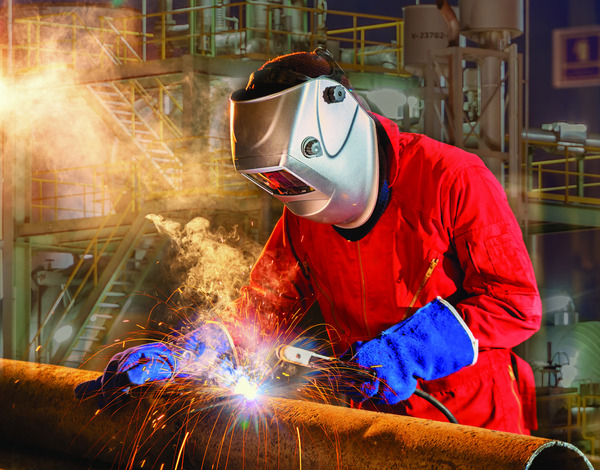
Use a welding helmet or hand shield with the correct filter lens shade for the process, along with flame-resistant clothing, gloves, eye protection, and protective footwear. OSHA lists minimum protective shades by welding type. Ventilation should control fumes through local exhaust or adequate mechanical air movement, and respiratory protection may be required if ventilation and work practices do not keep exposure at safe levels
2. Treat shop and jobsite fire prevention as a system
Keep combustibles away from the work area, shield arc work with noncombustible or flameproof screens, and make sure extinguishing equipment is available. If a serious fire could develop, such as when appreciable combustibles are within 35 feet, or sparks can travel to nearby materials, assign a trained fire watch. At the start of each shift, inspect torches, hoses, couplings, and tip connections, and keep hoses and cables clear of passageways, ladders, and stairs.
3. Understand the difference between certification and licensing
Certifications and licenses are not the same thing. AWS Certified Welder is a performance-based credential, and AWS also offers professional certifications such as CWI and CWS for higher-level roles. Legal licensing depends on the jurisdiction and the type of work. In some places, the requirement is a contractor license or a city welder license for specific structural work, not a universal statewide welder license. Always check the state, city, customer, and project specification before bidding on the job.
4. Protect employees with training and workers’ compensation
If you have employees, safety training and written procedures should be ongoing and built into daily operations, not treated as a one-time exercise. Workers’ compensation requirements are determined at the state level for private employers, and the obligation to carry coverage varies based on the state, industry, and number of employees. Workers’ compensation and employers’ liability are separate components of coverage, and for covered workplace injuries, workers’ compensation is generally the employee’s exclusive remedy against the employer.
5. Buy liability coverage that matches welding exposures
Commercial general liability helps protect against third-party bodily injury and property damage arising from premises and operations. For welders, one of the most important details is completed operations. A claim can happen long after the work is finished if a weld later fails and causes damage. Review exclusions carefully, especially auto, pollution, care, custody, and control, damage to your work, and failure to perform. If you take on larger contracts or higher-severity work, ask whether umbrella coverage is appropriate.
6. Protect the shop, tools, and equipment the right way
If you rent your shop, think in terms of policy components, not rented space insurance. Commercial property can cover building-related exposures you insure, business personal property, and tenant improvements where applicable. Business income and extra expenses can help after a covered property loss. If tools, rigs, or materials travel to jobsites, inland marine or contractor’s equipment coverage may be needed. If your operation depends on machinery, ask about equipment breakdown coverage because many commercial property policies exclude boiler and machinery losses.
7. Review vehicles, contracts, and policy limits every year
If you use pickups, vans, trailers, or employees’ vehicles for work, review commercial auto, including hired and non-owned auto exposures. Before work starts, make sure you can provide proof of insurance when a customer or other third party asks for it. Recheck your policies at least once a year, and again whenever you add employees, start fabrication work, buy higher-value equipment, or take on larger off-site jobs.
Welding businesses do best when strong workmanship is matched with strong safety controls and a precise insurance program. The right combination of PPE, ventilation, fire prevention, credentials, liability coverage, property coverage, and annual policy review can reduce preventable injuries and make it easier to survive a serious loss. Requirements vary by state, city, contract, insurer, and policy form, so treat this page as general guidance and confirm the final details with OSHA rules, your contract documents, and a licensed commercial insurance professional.